
Los Angeles County
Stucco Texture Matching in Los Angeles
Texture matching is what separates a repair you notice from one you do not. The material is the easy part; matching aggregate size, application rhythm, trowel pressure and years of weathering is the skill.
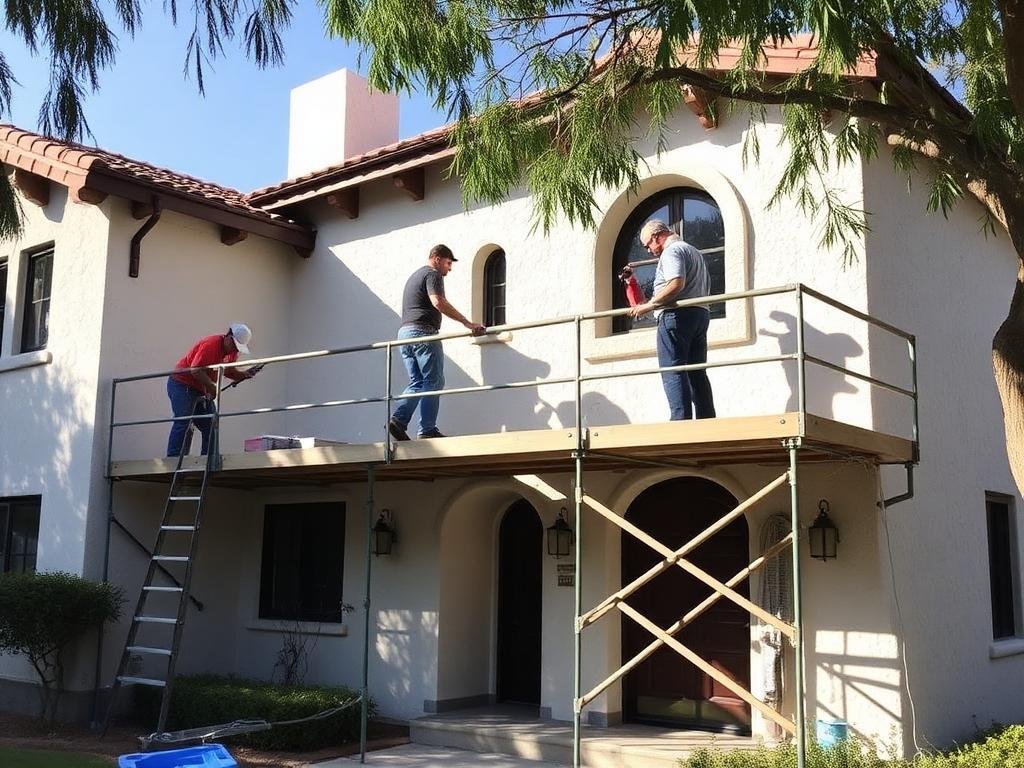
Magic Lath & Plaster provides stucco texture matching throughout Los Angeles County for property owners, general contractors, developers, multifamily properties, commercial buildings, HOAs, and residential projects.
We match existing stucco textures as closely as practical so repairs, additions, restorations, and re-stucco work blend with the surrounding building rather than standing out as a new patch.
Matching stucco is not simply a matter of choosing a finish with the same name. The existing texture, aggregate, application technique, surface depth, color, and weathering all affect how the finished repair looks.
What Has to Match in a Stucco Repair
A successful texture match involves several characteristics of the existing exterior.
Texture Type
We work with a variety of stucco finishes, including:
- Smooth stucco
- Sand float
- Dash
- Lace
- Skip trowel
- Hand-troweled finishes
- Custom or hybrid textures
Older buildings may also have variations that do not correspond to a standard named finish.
Aggregate Size & Density
The size, type, and distribution of aggregate affect how coarse or fine the finished surface appears.
Even when the general texture is correct, an aggregate that is noticeably finer or heavier can make a repair visible from a distance.
Application Technique
The way the finish was originally applied can affect its appearance. Depending on the existing surface, matching may involve reproducing characteristics of a hand-troweled, floated, sprayed, knocked-down, or other application technique.
Pattern & Surface Rhythm
Trowel direction, spray pattern, overlap, and the distribution of texture across the wall can all contribute to the appearance of the finished surface.
These details become especially important on larger visible repairs and architectural elevations.
Color
Existing stucco color changes over time due to sunlight, weather exposure, dirt, previous coatings, and normal aging.
A new finish can match the original color specification and still look different from an older weathered wall. We evaluate the surrounding surface rather than relying only on a color name or sample.
Surface Profile & Thickness
The repaired area also needs to transition properly into the surrounding wall.
If the new material sits proud of or below the existing surface, the repair can remain visible even when the texture itself is close.
How We Approach Stucco Texture Matching
We begin by examining the existing finish at the repair location.
We look at:
- Existing texture type
- Aggregate size and distribution
- Texture depth
- Trowel or spray pattern
- Existing color and weathering
- Previous repairs
- Surface profile
- Transitions to corners, bands, control joints, and other architectural features
This allows us to determine what characteristics need to be reproduced before the new finish is applied.
For larger or highly visible projects, a sample area or test patch can be useful for evaluating the proposed texture and color before completing the full scope.
Lighting can also affect how a texture appears. A finish can look different when wet compared with when it has cured, and changes in sunlight throughout the day can make subtle differences more noticeable.
Stucco Texture Matching for Repairs
Stucco repairs can be structurally and technically sound while still being visually noticeable if the finish does not blend with the surrounding wall.
When practical, we work the repaired area into the existing texture and feather the transition so there is not an abrupt change between new and existing material.
The size of the repair also matters. A small patch may be blended locally, while a larger damaged area may be better terminated at a natural architectural break.
Depending on the building, that may include:
- Corners
- Control joints
- Architectural bands
- Window or door openings
- Changes in elevation
- Parapets
- Other existing transitions
The objective is to make the repair integrate naturally with the surrounding elevation rather than simply placing a new texture over the damaged area.
Texture Matching for Re-Stucco & Restoration
Texture matching is also important when only portions of an existing building are being re-stuccoed or restored.
On older commercial and multifamily properties, an elevation may contain years of previous repairs, additions, equipment changes, and weathering. Existing finishes may vary from one portion of the building to another.
For restoration and re-stucco projects, we evaluate the surrounding finish and determine whether the new work should match an existing texture or establish a new consistent finish across a larger area.
When the existing finish cannot reasonably be reproduced, extending the work to a natural break or refinishing a larger elevation may provide a more consistent result.
Honest Limits of Stucco Texture Matching
An exact match is not always possible.
A heavily weathered wall may have changed significantly from its original color and texture. Previous paint, repairs, UV exposure, airborne dirt, and years of weathering can all affect the existing appearance.
Some older textures may also have been produced using application methods, materials, or equipment that are no longer readily available.
When an exact match is not practical, we explain the limitation before the work begins and discuss available options, which may include:
- Accepting a close but detectable repair
- Extending the repair to a natural architectural break
- Matching the surrounding elevation as closely as practical
- Refinishing a larger section
- Re-stuccoing the full elevation for a more uniform appearance
The appropriate option depends on the condition of the existing stucco and the desired finished appearance.
Stucco Texture Matching for Commercial & Multifamily Properties
Texture matching becomes particularly important on large commercial and multifamily buildings because repairs remain visible across expansive elevations.
Common situations include:
- Impact damage
- Water intrusion repairs
- Removed signs and equipment
- New conduit or penetrations
- Window and door modifications
- Plumbing or mechanical work
- Localized stucco deterioration
- Previous failed repairs
- Building additions and alterations
Without proper texture matching, repeated repairs can leave an elevation with increasingly visible patchwork.
For property managers and owners responsible for ongoing maintenance, documenting existing finishes can also make future repair work more consistent.
Matching Existing Stucco on Additions & New Work
Additions and modifications can create a similar challenge.
A new wall or architectural element may need to transition into an older stucco elevation. Even when the new construction is properly installed, differences in texture, color, aggregate, and weathering can make the transition obvious.
We evaluate the existing exterior and consider how the new stucco should transition into the surrounding building.
Where practical, the finish can be matched to the existing surface. In other cases, extending the finish to a logical architectural break may create a cleaner transition.
Stucco Texture Matching & Color Matching
Texture and color need to be considered together.
A texture can be reproduced accurately while the repair still appears different because the surrounding stucco has faded or weathered over time.
For this reason, we evaluate both the surface texture and existing color before determining the appropriate finish approach.
Why Stucco Texture Matching Is Difficult
Stucco that originally looked uniform can change considerably over the life of a building.
Sun exposure, moisture, dirt, repainting, repairs, and normal weathering all affect the appearance of the finished surface.
- Texture type
- Aggregate size
- Texture depth
- Application technique
- Trowel or spray pattern
- Color
- Surface profile
- Existing weathering
- Architectural transitions
The closer these characteristics can be reproduced, the more naturally the repair can integrate with the surrounding building.
Stucco Texture Matching in Los Angeles County
Magic Lath & Plaster provides stucco texture matching for commercial, multifamily, HOA, residential, restoration, repair, and re-stucco projects throughout Los Angeles County.
Whether you need to match an existing repair, blend a new addition into an older building, restore a damaged elevation, or reproduce a difficult existing texture, we evaluate the surrounding stucco before establishing the finish approach.
Our goal is to produce a repair or new finish that is as consistent with the existing building as practical, while being upfront about limitations when an exact match cannot be achieved.
Service areas
- Texture Matching in Los Angeles
- Texture Matching in Downtown Los Angeles
- Texture Matching in Hollywood
- Texture Matching in West Hollywood
- Texture Matching in Beverly Hills
- Texture Matching in Santa Monica
- Texture Matching in Culver City
- Texture Matching in Inglewood
- Texture Matching in Glendale
- Texture Matching in Burbank
Answers
Frequently Asked Questions
Can you match any stucco texture?
We match the great majority of textures found on Los Angeles buildings. Heavily weathered color and unusual legacy spray patterns are the two limits, and we identify those before work starts rather than after.
Will the repair still be visible after matching?
A well-matched repair on a normally weathered wall generally blends. On badly faded elevations, some color difference can remain until the new material weathers in.
Do you provide sample areas before completing the work?
For visible or large-scale matching, yes. A sample is applied and reviewed in daylight before the full repair proceeds.
Which finishes do you commonly match?
Smooth, sand, dash, lace and skip trowel, plus Santa Barbara and other hand-troweled variations.
Do you match Santa Barbara or hand-troweled finishes?
Yes. We work with traditional hand-troweled and architectural finishes as well as common sand, lace, dash, smooth, and custom textures.
Related work
Other stucco and plaster services
Stucco Repair
Cracks, holes, water-damaged sections and failed patches repaired and blended into the surrounding finish.
Re-Stucco
Complete exterior renewal — a new finish coat over a prepared existing wall, restoring color, texture and uniformity.
Exterior Plaster & Finishes
Finish coats, textures and architectural detailing that determine how a commercial building actually looks.
Commercial Stucco
Exterior stucco systems, restoration and repair for apartment, retail, office, hospitality and industrial buildings across Los Angeles County.